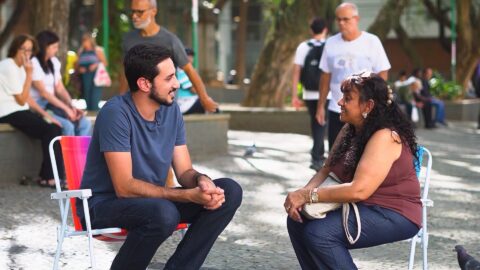
Afinal, o que é ser mulher?
An inclusive, interdisciplinary exploration of gender, identity, and the ever‑evolving meaning of “woman” in the 21st century.
Introduction
The question “What does it mean to be a woman?” has been asked, argued about, and re‑examined for centuries. Yet today, the answer feels both more urgent and more contested than ever. Rapid shifts in science, culture, politics, and technology have expanded the conversation beyond biology alone, inviting us to consider how gender intersects with race, class, sexuality, ability, and personal narrative. In this article we’ll unpack the multiple layers that shape “womanhood,” highlight the voices that have traditionally been excluded, and examine how contemporary movements are redefining the term—sometimes breaking it open, sometimes reclaiming it.
1. The Biological Core (and Its Limits)
At its most basic level, the majority of people assigned female at birth (AFAB) possess a genotype of XX, a set of reproductive organs (ovaries, fallopian tubes, uterus, vagina), and typically a natural capacity for gestation. These physiological traits have historically been used as the definitive marker of “woman.”
Why biology matters
- Reproduction: The ability (or choice) to bear children has shaped societal roles, legal rights, and cultural myths about women.
- Health considerations: Biological differences inform medical research, maternity care, and public health policies.
Why biology alone is insufficient
- Variations: Intersex individuals are born with atypical chromosomal, hormonal, or anatomical configurations, demonstrating that “female” does not map cleanly onto a single biological template.
- Transition: Hormone therapy, surgery, and other medical interventions enable people assigned male at birth (AMAB) to develop physical characteristics traditionally associated with women, challenging the notion that biology is immutable.
Bottom line: Biology provides a foundational layer, but it does not—and cannot—capture the full spectrum of human experience.
2. Social and Cultural Construction of Womanhood
2.1. Historical Roles
Throughout history, societies have codified “woman” through rites of passage, labor divisions, legal status, and mythologizing:
- Ancient Mesopotamia & Greece: Women were largely defined by familial roles (wife, mother) but occasionally wielded power as priestesses or patrons.
- Medieval Europe: The “courtly love” ideal and religious figures like saints offered limited avenues for female agency.
- Industrial Age: Factory work, the suffrage movement, and domestic ideology began to contrast sharply, sparking early feminism.
2.2. Modern Expectations
In the 20th and 21st centuries, media, advertising, and social norms continue to shape expectations—from the “ideal” body type to the pressure of balancing career and family. Yet, these expectations are being actively contested:
- Body positivity challenges narrow beauty standards.
- Queer theory destabilizes the link between gender performance and genitalia.
- Digital platforms provide new spaces for women to tell their stories, organize, and redefine norms.
2.3. The Power of Narrative
Stories—whether in literature, film, or personal testimony—do more than reflect culture; they create possibilities for how women see themselves. When representation expands (e.g., women in STEM, non‑binary mothers, trans women athletes), the cultural script for womanhood broadens, allowing more individuals to claim the label authentically.
3. Intersectionality: The Crucial Context
The phrase “woman” is never neutral; it is filtered through race, class, sexuality, ability, nationality, and more.
| Axis | Example | Impact on Experience |
|---|---|---|
| Race | Black women in the U.S. historically faced both racism and sexism, leading to distinct stereotypes (e.g., “Mammies,” “Jezebel”). | Overlooked in mainstream feminist movements; higher maternal mortality rates. |
| Class | Working‑class women often juggle multiple low‑wage jobs, limiting access to healthcare and education. | Economic vulnerability shapes choices about reproduction, divorce, and careers. |
| Sexual Orientation | Lesbians, bisexual, and queer women confront heteronormative expectations of romance and sexuality. | May face “lesbian erasure” within both heterosexual and gay male communities. |
| Disability | Disabled women confront ableist assumptions that they are asexual or incapable of motherhood. | Higher rates of sexual violence and limited reproductive autonomy. |
| Immigration Status | Undocumented women have limited legal protections, making them vulnerable to exploitation. | Fear of deportation can deter seeking healthcare or reporting abuse. |
Kimberlé Crenshaw’s concept of intersectionality reminds us that oppression is multi‑layered, and liberation must address these overlapping systems rather than treating “woman” as a monolithic group.
4. Personal Narrative: “Being a Woman” as a Journey
“I grew up thinking that being a woman meant wearing dresses, loving football, and staying quiet when the boys talked about video games. When I was 17, I started binding, exploring my agender identity, and realized that ‘woman’ was a label I could choose for myself, not one forced on me by my body. Now, as a trans woman, I see ‘woman’ as a blend of my past experiences, my present aspirations, and the future I want to build for other women—trans, cis, and everything in between.”
— Lia, 24, activist and writer.
Stories like Lia’s illustrate that womanhood can be both chosen and inherited, shaped by internal identity and external social pressures. Such narratives challenge the binary view that you’re either “born a woman” or “become a woman,” suggesting a fluid continuum where authenticity matters more than origin.
5. Contemporary Movements Redefining Womanhood
| Movement | Core Goal | Key Contributions |
|---|---|---|
| Intersectional Feminism | Include marginalized voices in feminist discourse. | Highlights how race, class, and sexuality intersect with gender oppression. |
| Trans Rights Advocacy | Secure legal recognition and healthcare for trans individuals. | Expands the definition of “woman” beyond the binary; influences inclusive language in law and policy. |
| Body Positivity & Fat Activism | Challenge narrow beauty standards. | Promotes acceptance of diverse body types, reshaping cultural ideals of femininity. |
| Inclusive Language & Pronoun Use | Normalize respectful address regardless of gender identity. | Reduces misgendering, creates safer spaces in schools, workplaces, and media. |
| Digital Feminism | Use social media to organize, educate, and resist online harassment. | Amplifies grassroots activism, creates global solidarities, and pressures platforms for accountability. |
These movements collectively illustrate that the meaning of “woman” is dynamic and negotiated, not fixed by any single authority.
6. The Legal and Policy Landscape
Different countries vary dramatically in how they protect—or limit—women’s rights:
- Sweden & Norway: Strong gender equality legislation, generous parental leave for all parents, and robust anti‑discrimination laws.
- United States: Landmark decisions (e.g., Roe v. Wade—overturned 2022) shape reproductive rights, while ongoing battles over Title IX and workplace equity continue.
- India: Constitutional guarantees of gender equality, yet deep‑rooted patriarchal practices affect property rights, dowry laws, and access to healthcare.
- Brazil: Despite progressive court rulings on same‑sex marriage and trans identity documentation, misogynistic violence and legislative back‑lashes remain prevalent.
Legal frameworks matter because they define rights (healthcare, education, employment) and signal societal values. However, law alone cannot eradicate cultural biases; it must be paired with education, representation, and grassroots change.
7. Looking Ahead: What Does the Future Hold?
- Greater Fluidity in Identity Categories – As societies become more aware of gender spectrums, we may see the term “woman” used both as a self‑identifying label and as a legal category, with more nuanced distinctions (e.g., “cis‑woman,” “trans‑woman,” “non‑binary woman”).
- Technology and Reproduction – Advances in artificial wombs, genetic editing, and fertility preservation will decouple reproduction from anatomy, prompting fresh debates about what it means to “bear” a child and who is considered a mother.
- Global Solidarity Networks – Digital platforms enable women from disparate corners of the world to share strategies, creating a truly intersectional global feminism that addresses climate change, migration, and economic inequality.
- Policy Innovation – Experiments with universal basic income, universal healthcare, and inclusive education promise to reduce structural barriers that have traditionally limited women’s autonomy.
Conclusion
“Afinal, o que é ser mulher?”—After all, what does it mean to be a woman? —the question remains open, ever‑evolving, and deeply personal. It cannot be pinned down to a single answer, nor can it be decided by any one group. Being a woman is a multifaceted tapestry woven from biology, culture, history, politics, and individual self‑understanding. By acknowledging this complexity, we honor the diversity of experiences that define womanhood today and invite a more inclusive future where every person can define “woman” on their own terms.
Further Reading & Resources
- Books: We Should All Be Feminists (Chimamanda Ngozi Adichie); Gender Trouble (Judith Butler); The Color of Law (Richard Rothstein).
- Organizations: Amnesty International, Women’s March, Trans Lifeline, Body Positive.
- Online Forums: r/Feminism, r/TransRights, #WomenInSTEM (Twitter, Instagram).
Let’s keep asking the question, listening to the answers, and building a world where “woman” is a label that expands—not confines—our possibilities.