
✅ Site Oficial:
#emagrecer, #comoemagrecer, #emagrecerrapido, #emagrecerdevez, #perderpeso, #perderbarriga, #suplementoparaemagrecer, #emagrecerem1semana, #emagrecercomsaude, #emagreceremcasa, #emagrecimentonatural, #emagrecimentosaudavel, #comosecarabarriga, #emagrecimentorapido, #produtoemagrecedor, #mounjax, #mounjaxfunciona, #mounjaxreview, #mounjaxgotas, #mounjaxoriginal, #mounjaxresultados, #mounjaxoficial
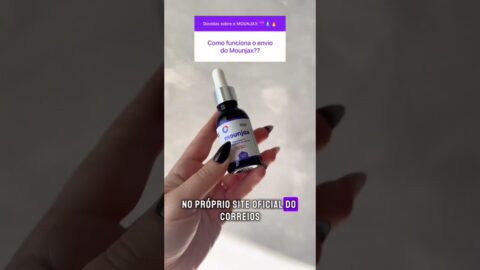
🔴 VOCÊ QUER EMAGRECER RÁPIDO, COM SAÚDE E SEM SOFRER?
Descubra como o Mounjax, o suplemento 100% natural em gotas, está transformando a vida de milhares de pessoas no Brasil! 🌿🔥
Neste vídeo, você vai conhecer tudo sobre o Mounjax:
✅ O que é e como funciona
✅ Quais ingredientes aceleram o metabolismo
✅ Como tomar para emagrecer de verdade
✅ Resultados reais de quem usou
✅ E o segredo por trás das 12 gotas ao dia!
🚨 Assista até o final para descobrir como garantir o seu com frete grátis e desconto exclusivo direto do site oficial!
📌 Mounjax é ideal para quem quer:
✔️ Queimar gordura mesmo em repouso
✔️ Controlar a fome e os desejos por doces
✔️ Desinchar, perder barriga e voltar a caber nas roupas
✔️ Emagrecer com mais energia e autoestima
🎯 Se você já tentou de tudo e não conseguiu resultados, talvez seu corpo só precise de um empurrão certo. E o Mounjax pode ser exatamente isso.
🔗 Clique aqui e acesse o site oficial com desconto →
🛡️ Site 100% seguro | Garantia de 30 dias | Produto original com bônus
Compartilhe esse vídeo
#emagrecer, #comoemagrecer, #emagrecerrapido, #emagrecerdevez, #perderpeso, #perderbarriga, #suplementoparaemagrecer, #emagrecerem1semana, #emagrecercomsaude, #emagreceremcasa, #emagrecimentonatural, #emagrecimentosaudavel, #comosecarabarriga, #emagrecimentorapido, #produtoemagrecedor, #mounjax, #mounjaxfunciona, #mounjaxreview, #mounjaxgotas, #mounjaxoriginal, #mounjaxresultados, #mounjaxoficial
source
From Script to Story: Turning a YouTube Transcript into a Compelling Article
By [Your Name] – June 10 2026
Introduction
YouTube is the world’s largest video‑sharing platform, and every day millions of creators pour their ideas, expertise, and personality into a stream of video content. Behind each of those videos is a transcript—the written record of what was spoken on screen. While most viewers consume the video directly, a transcript offers a hidden goldmine of information that can be reshaped into a powerful, SEO‑friendly article.
In this piece, we’ll walk through a step‑by‑step process for turning any YouTube transcript into a polished article that:
- Preserves the creator’s original voice while improving clarity.
- Adds value through research, structure, and visual aids.
- Optimizes for search engines and social sharing.
Whether you’re a content marketer, a blogger looking for fresh ideas, or a YouTuber who wants to repurpose video into written form, this guide will give you a reproducible workflow you can apply to any transcript.
1. Grab the Transcript – The Raw Material
a. Where to Find It
| Platform | Method |
|---|---|
| YouTube | Click the three‑dot menu → “Show transcript.” (If auto‑generated, download with a third‑party tool for better accuracy.) |
| YouTube Studio | Under Subtitles → download the .sbv/.vtt file. |
| Third‑Party Services | Services like Rev, Otter.ai, or Descript provide higher‑accuracy, time‑coded transcripts for a fee. |
b. Clean Up the Text
- Remove timestamps (e.g., “[00:01:23]”).
- Delete filler words (“um,” “uh,” “like”)—unless they serve a stylistic purpose.
- Correct mis‑recognitions (e.g., “their” → “there”) by listening back to ambiguous sections.
- Standardize terminology (e.g., “AI” vs. “artificial intelligence”).
Tip: Use a simple find‑replace script in a text editor (VS Code, Sublime) to strip timestamps quickly:
regex
[dthe genius wave review:dthe genius wave review:dthe genius wave review]s*
2. Identify the Core Narrative
A YouTube video usually follows one of three structures:
| Structure | Typical Video Type | How to Detect It |
|---|---|---|
| Problem → Solution | Tutorials, product demos | Look for a pain point early, then a list of steps. |
| Storytelling | Vlogs, documentaries | Chronological cues (“first,” “then,” “finally”). |
| Listicle | Top‑10, “5 Ways to…” | Repeated numbered phrases or bullet points. |
Read the cleaned transcript once and ask:
- What is the main thesis? (One sentence that captures the video’s purpose.)
- What are the supporting pillars? (Three‑to‑five key points that flesh out the thesis.)
- What call‑to‑action (CTA) does the creator include? (Subscribe, download, comment, etc.)
Mark these sections with headings in the transcript (e.g., # Introduction, ## Why It Matters, ### Step 1). This will become the backbone of your article.
3. Re‑Structure for Readability
a. Create a Classic Article Outline
1️⃣ Hook / Lead (2‑3 sentences)
2️⃣ Brief overview / Thesis statement
3️⃣ Body Section 1 – Main Point + Evidence
4️⃣ Body Section 2 – Main Point + Evidence
5️⃣ Body Section 3 – Main Point + Evidence
6️⃣ Counterpoints / FAQs (optional)
7️⃣ Conclusion + CTA
b. Expand with Sub‑Headings
- Use H2 for main sections, H3 for sub‑points.
- Add bulleted or numbered lists where the video used “step‑by‑step” language.
- Insert pull quotes from the transcript to keep the creator’s voice intact.
Example:
“If you’re not tracking your emotions daily, you’re missing the first clue that your mental health is deteriorating,” says Dr. Lee.
c. Insert Transitional Phrases
Video scripts often jump between ideas without text‑friendly transitions. Smooth the flow with phrases like:
- “Building on that idea…”
- “Conversely, …”
- “As a result,…”
4. Enrich the Content
a. Add Data and Sources
- Fact‑check any statistics mentioned. Replace “90 % of users” with a citation from a reputable source (e.g., Pew Research, Statista).
- Link to original studies or official reports. This boosts credibility and SEO.
b. Include Visual Elements
| Element | When to Use | How to Source |
|---|---|---|
| Images/Infographics | To illustrate complex concepts (e.g., a flowchart of a process). | Create with Canva or pull from royalty‑free sites (Unsplash, Pexels). |
| Embedded Video | When you want readers to watch the original clip. | Use YouTube’s embed code. |
| Tables | For side‑by‑side comparisons mentioned in the video. | Build in HTML or Markdown. |
| Quotes | Highlight particularly memorable spoken lines. | Use blockquote styling. |
c. Optimize for SEO
- Primary keyword: Match the video’s title or target phrase (e.g., “how to seed a garden”).
- LSI keywords: Sprinkle synonyms and related terms throughout (e.g., “planting seeds,” “garden starter guide”).
- Meta description: Summarize the article in 150‑160 characters, including the primary keyword.
- Alt text for images: Describe each visual with relevant keywords.
d. Add a Strong Call‑to‑Action
If the creator urged viewers to subscribe, translate that into a written CTA:
Enjoyed the breakdown? Subscribe to our newsletter for weekly tips on sustainable gardening.
5. Polish the Voice
a. Preserve Authenticity
- Keep signature phrases that make the creator recognizable.
- Avoid over‑formalizing a casual conversation; instead, slightly tighten grammar while retaining personality.
b. Grammar & Style Check
- Run the draft through tools like Grammarly, ProWritingAid, or ChatGPT’s own editor.
- Ensure consistent AP style (or your brand’s style guide).
c. Read Aloud
Read the article aloud (or use a TTS tool). If it sounds stilted, re‑write the problematic sentence.
6. Publish & Promote
-
Publish on your website or blog, using a clean layout that highlights headings and visuals.
-
Cross‑post on Medium or LinkedIn for added reach; include a canonical link to avoid duplicate‑content penalties.
-
Share on social platforms:
- Twitter thread summarizing each section with a link.
- Instagram carousel using the same visuals from the article.
- Facebook post quoting a powerful line and inviting discussion.
-
Track performance with Google Analytics and Search Console. Look at metrics like average time on page (a good indicator that the article is as engaging as the video) and organic traffic growth.
7. Bonus: Automating the Workflow
For creators who want to repurpose multiple videos, consider building a semi‑automated pipeline:
| Step | Tool | Automation Level |
|---|---|---|
| Transcript extraction | YouTube API + Google Speech‑to‑Text | 90 % |
| Cleanup & timestamp removal | Python script (regex) | 100 % |
| Outline generation | ChatGPT (prompt: “Create an outline for the following transcript”) | 80 % |
| SEO insertion | SurferSEO API | 70 % |
| Publishing | WordPress REST API | 60 % |
Even if only 50 % of the process is automated, the time saved per video can be hours, allowing creators to focus on strategy rather than grunt work.
Conclusion
A YouTube transcript is more than a text dump—it’s a blueprint for high‑quality written content. By cleaning the raw script, identifying its core narrative, restructuring for readability, enriching with data and visuals, and polishing the voice, you can transform a 10‑minute video into an SEO‑friendly article that reaches new audiences and extends the life of the original content.
Bottom line: Repurposing video into text isn’t a chore; it’s a strategic content multiplier. Follow the steps above, and you’ll turn every minute of spoken word into a lasting piece of evergreen knowledge.
Ready to repurpose your next video? Grab the transcript, follow this workflow, and watch your blog traffic bloom!





![J-Fire – အထာကျတဲ့အချစ် | A Htar Kya Tae A Chit [Official Music Video]](https://10cantinhodovideo.lc7x.com/wp-content/uploads/2026/10/1791562472_maxresdefault-480x270.jpg "J-Fire – အထာကျတဲ့အချစ် | A Htar Kya Tae A Chit [Official Music Video]")